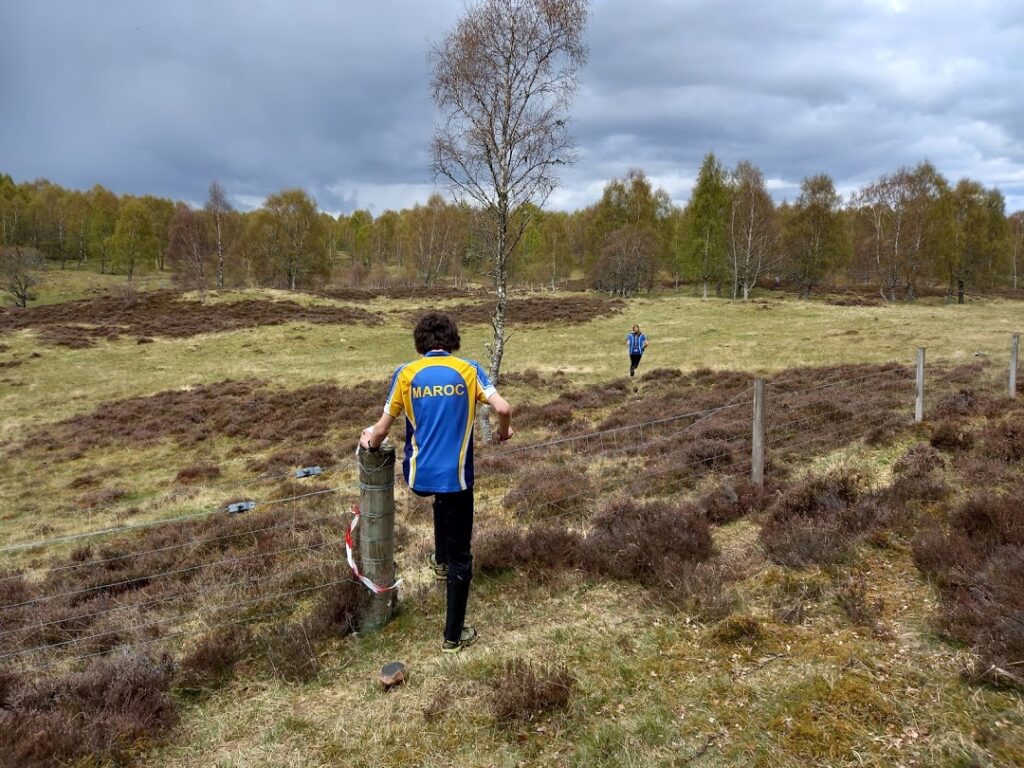
Last week the World School Championships in Orienteering took place in Otepaa, Estonia. The team had a fantastic week, with some really solid results that bode well for the future, especially as many of the youngsters are in the younger year of the 2-year age category.
Congratulations to all this year’s Scottish Night and Scottish Sprint Orienteering champions, who claimed their titles in the 2019 championship events which took place on Saturday 2nd (hosted by Interløpers) and Sunday 3rd Febrruary (hosted by ESOC.) Read More…
More and more, communication is moving online. How does your club do it? Do you have a modern and relevant website with interesting and regular updates? Do you use social media? Think of your club’s online presence as being like the shop window that will entice people through the door. Clubs need to look attractive online and posts should be relevant to the audience you are trying to reach.
The key place to start is your website. This should be the main source of information about your club, forming a permanent record. News, event write-ups, information about what you do, results archives and details of mapped areas could all be included. The information needs to be clear, easy to find and look good. If your website is dull, out of date or experiencing technical problems, it could be a good use of club funds to pay for a professional web makeover.
Social media is more transient; it should complement the website, and provide a way for people to interact with your club and ask questions of real people (but remember not everyone uses social media, nor should they have to).
Using different channels should reach more people. Once you are happy that your website is up to date, and a proper reflection of your club, think about social media. First, consider which social media platform might be best for your club.
What are you trying to achieve: better engagement with members; more event publicity; new members for your club; live updates from results at your competitions? Social media can quickly spread the word about your club to get lots of people thinking and talking about orienteering. Facebook and Twitter are the most commonly used sites and have different appeals.
A Facebook page (e.g. www.facebook.com/scottish.orienteering) is public and lets you connect with people through posts and messages. Once your page is created, you need people to ‘Like’ the page and then they can ‘Like’, ‘Comment’ on and ‘Share’ any content (‘Statuses’) that you post. You can also create an ‘Event’ and then invite people to it, a handy way of advertising your next training or competition. Facebook can be used privately if you prefer, by creating a Facebook Group which can only been used by those who join the group, but you will reach a wider audience if pages are public.
On Twitter (e.g. twitter.com/scottish_o), the information shared is very concise – tweets can only be 140 characters long. You ‘Follow’ accounts you are interested in, and then their tweets will appear on your newsfeed; they might follow you back and engage with you. You can ‘Favourite’, ‘Retweet’ and ‘Reply’ to accounts you follow, as well as tweeting out your own updates. Items on Twitter are often fleeting, updates are in real time, and you need to look in frequently.
With both sites, it is essential to post regularly; the posts must be relevant and interesting, and rememberwho you are trying to appeal to; you can’t be everything for everyone. Content can be simple text or can include photos, links or videos, which are great to liven up your page. It is also important to respond promptly to anyone who directly contacts you. All of this requires some work; make sure there is someone willing to look after these pages. But it needn’t be a chore; sharing the role helps, and different personalities will give more varied content. Could you get your juniors involved? It’s also important to remember that building up your audience takes time, as well as creativity. You will get out what you put in; give it a chance to work.
So get online, give your website a spring clean, and for social media your first port of call could be to ‘Like’ the Scottish Orienteering Facebook page, or follow Scottish Orienteering on Twitter. See you on the internet soon!
For more information on social media, there is some great advice on the Club Matters website: www.sportenglandclubmatters.com/home/club-promotion/social-media.
If you have any questions on anything in this article, do get in touch with Johannes or Rona (details on the Contacts page), to see how we can help you.
The events which form part of the 2023 Scottish Orienteering League (SOUL) series have been finalised and details including links to all of the events can be found on the SOUL events page on the website or via this link here.
Eleven events will form the 2023 SOUL series. The best six scores will be used to determine an individual’s league positions for all classes other than the Young Junior, Junior and Hyper Veteran classes where the best four scores will count for an individual’s league position.
SOLWAY Urban Event Map
The roll of honour for the 2022 SOUL series, with details of those first, second and third in each class, is available here. The trophy presentation will take part after the Edinburgh University Orienteering Club’s (EUOC) Edinburgh City Race (SOUL 1) on January 28th 2023. Certificates for the first three in each class have already been distributed to clubs.
The challenge of orienteering has always been the same – navigating between controls (checkpoints) using a map and compass – and like other sports, modern technology can enhance the experience for competitors and spectators.
SOA technology available for orienteering clubs to use
While most clubs have the equipment they need for regular events, the SOA has extra technology which can help enhance larger orienteering events.
GPS trackers – The SOA has a limited number of GPS trackers which typically are used at major events to display athletes’ positions in real time.
Start Clocks – The SOA owns Start Clocks, which clubs can use. These paired devices include one clock for the start line and one for the pre-start/call-up line, with an audible countdown in the last few seconds before a competitor starts. Various apps are also available for iOS and Android devices which replicate these clocks.
Radio controls – Unmanned remote units which relay information back to a central point, typically the commentary team. The SOA owns and maintains several of these, with options for communicating with the central point including cable, radio and mobile networks up to 4G.
Satellite broadband system – The Scottish Orienteering 6-Day Event Co Ltd owns a system which can be used in areas of poor or heavily used mobile phone signal to support radio control telemetry, GPS tracking, results uploading, and limited video streaming.
This year’s Scottish Spring and Sprint Scotland events have
helped raise more than £4,000 to help the Scottish Junior Orienteering and
Scottish Elite Development Squads.
The Moray Schools took place on Thursday 6th October in glorious sunshine at Gordonstoun School with 20 primary and 3 secondary schools represented. The event was administered by Active Schools with Moravian providing all the technical support. Winning the right to battle it out with schools across the rest of Scotland were Forres Academy while the top two primary schools were Bishopmill (Elgin) and Kinloss. Read More…
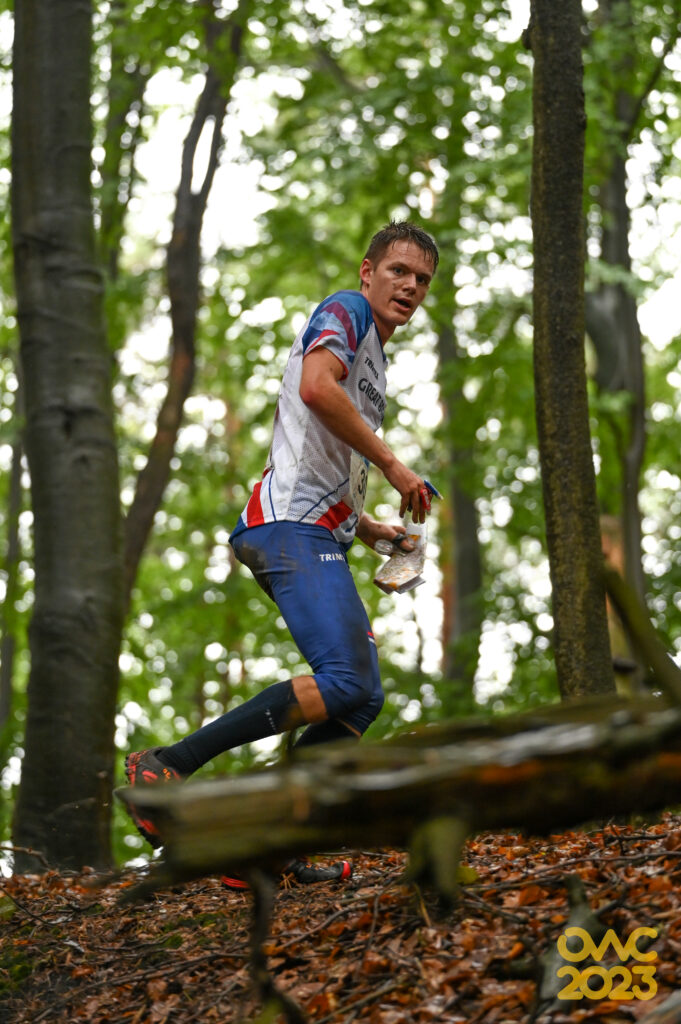
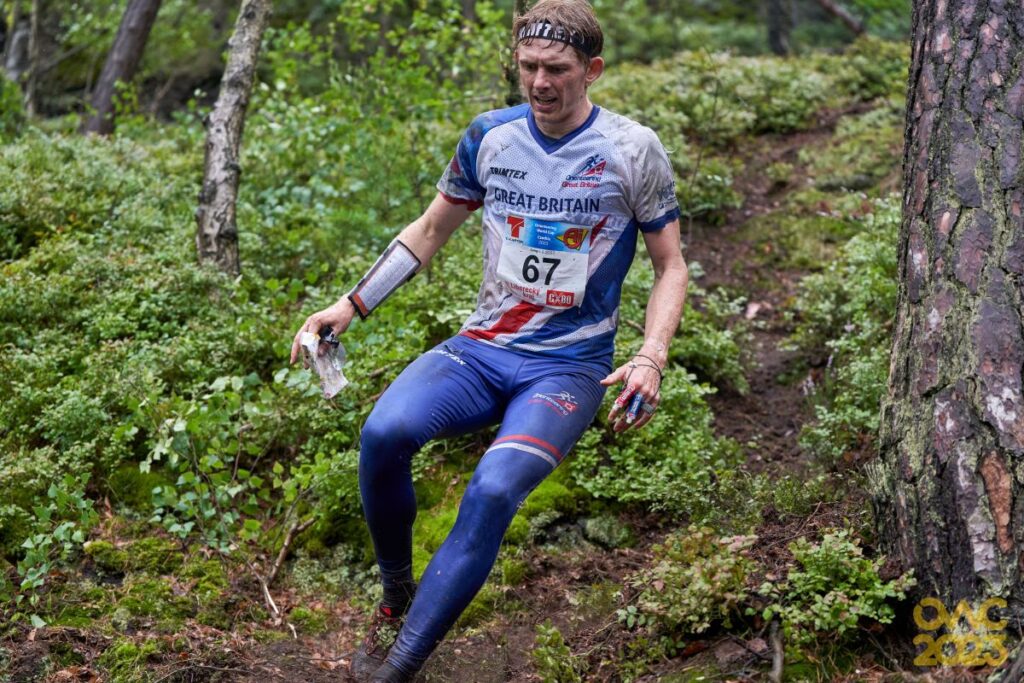
An impressive total of 10 Scottish or Scotland-based athletes have just returned from competing for GB in Kuopio, Finland, where the final round of this year’s Orienteering World Cup was held. This set of races was doubly significant for the team as Kuopio is the host of the 2025 World Orienteering Championships, thus allowing runners to get a feel for the terrain and planning challenges they will be up against in July of next year.
Peter Molloy in Czechia at World Orietneering Championships 2023 Photo Credit: IOF Tomas Bubela
Having spent a few days familiarising themselves with the characteristics of forest in this region of Finland, which can offer both varying runnability and visibility whilst still always (nearly always) leaving you with a smile on your face, the first race was the long distance. The 20 degrees drop in temperature from the European Championships was greatly appreciated, and GB capitalised on this with some strong performances.
Ralph Street (17th) and Megan Carter-Davies (22nd) produced the strongest results of the day, however they were followed closely by Scots Josh Dudley (MarOC) in 37th and Grace Molloy (FVO) in 35th. A special mention should also go to Matthew Gooch and Eilidh Campbell (both EUOC and MarOC) for making their senior international debuts in this race and achieving 68th and 94th respectively. There isn’t much more of a brutal start than racing the Scandinavians in Scandinavia, so they should look forward to building on these results in future.
Josh Dudley in Czechia at World Orietneering Championships 2023 Photo Credit: IOF Petr Hap
Following a rainy rest day the athletes were back out into the forest on Saturday for the middle distance; a discipline which is perhaps the hardest to achieve a strong result since the margin for error is so vanishingly small. Josh Dudley was the top performer for the Scottish men, finishing in 48th despite only being 5:50 down on the winner. Saturday was also the chance for Euan Tryner (EUOC) to make his senior international debut and despite catching a cold in the lead up to the race he turned in a solid performance to come 70th. Grace Molloy, with no help whatsoever from the Norwegian runner starting two minutes behind her, improved on Thursday’s result to sneak into the top 30, whilst Jo Sheperd (INVOC) ran well to finish 52nd. Rachel Brown (EUOC) finished in 67th whilst Niamh Hunter (also EUOC) finished in 85th.
Sunday’s relay promised and duly delivered fast and exciting head-to-head racing. The men were off first and all produced solid performances: GBR1, anchored by Josh Dudley, finished as 8th nation, with GBR3 featuring Peter Molloy (FVO) and Matthew Gooch finishing only 3 minutes behind them. In the women’s race GBR1, featuring Jo Shepherd and Grace Molloy, likewise finished as 8th nation, with Fiona Bunn recovering from previous ankle soreness to run a strong anchor leg for GBR2.