
What works for attracting newcomers to orienteering? Find out what was discussed at our February Community Conversation!
Community conversations bring members together each month to share experiences, successes, challenges and ideas on an allocated topic. This month’s conversation focused on development and recruiting newcomers. Community Conversations are open discussions so provide a great platform to see how other clubs work with newcomers and what learnings could potentially be taken forward into your own club.
Below is an overview of the key outputs of the most recent discussion from a variety of themes.
Key takeaway points:
- Publicity
- Clubs are finding that paid advertising on social media reaps the reward in terms of widening their reach and advertising their upcoming events. Flyers and posters that contain basic and jargon-free information, alongside attractive and relevant photos are a great resource to hand out at school sessions, or to post on community noticeboards
- CATI and Newcomer blocks –
- Newcomer blocks have proven more successful when getting participants to pay in advance and feel more welcoming when the focus is on participation and not membership.
- The gap between schools activities and club activities and the need to get parents involved
- Getting school pupils to participate in club events is difficult and the key to this being more successful is getting the parents involved.
- Attracting Runners
- Parkrun takeovers are great for increasing visibility and selling orienteering as a sport. Having a Red course at events for these ‘newbie runner’ types is a great way to get them involved and give them confidence. It’s a good idea to build up a mailing list of participants from these tasters to then follow up and encourage further participation.
- Using Record Cards, Badges and the Star Award to Retain Juniors
- These are a great tool for getting children wanting to come back, and clubs who use them have been surprised at how well they do at remembering to bring record cards back!
- Weekly club activities – do they help with newcomer retention?
- Often these are only attended by long standing members, but can be advertised as part of the benefits you receive once you purchase a membership. Residential trips can be a big selling point and are great for creating a club atmosphere.
Further detail on the discussions can be found in the rest of the article as well as an update on SOA plans around development work. Thank you for insights shared from experiences within Kingdom of Fife Orienteers (KFO) and Forth Valley Orienteers (FVO), with further contributions from Moravian Orienteering Club (MOR), Edinburgh Southern Orienteering Club (ESOC), Interlopers Orienteering Club (INT) and Roxburgh Reivers (RR).
SOA Development Next Steps
SOA will be continuing to grow in its own approach to development, both internally within the Scottish Orienteering community as well as more broadly to raise the profile of our sport. The coming year will see more focus on work within schools to increase the general awareness of orienteering as a sport across Scotland. Teachers will be trained up so that they can provide orienteering sessions within their school and have a knowledge of how this can be implemented across a range of curriculum topics. With SOA focussing on children within schools, we will be using this year’s development funding to encourage clubs to focus on recruitment of young adults as this is where the current demographic of the sport is lacking. If you have any queries related to development, then get in touch with our two development officers Louise and Heidi on louise@scottish-orienteering.org or heidi@scottish-orienteering.org respectively.
Future Community Conversations
We’re keen to keep building collaboration across clubs and the Community Conversations series is an important way of doing this. Everyone is welcome to attend any and all sessions so please do participate where you can. Information on each monthly event will be posted in advance on the SOA website with a sign-up link. The next SOA Community Conversation will be on Mon 3 March, and the theme of Development for Progression and Retention. Register here. A Zoom link will be sent out to participants nearer the time. It is currently being discussed how the Community Conversations series can be made more visible with a streamlined way for people to find information – if you have any suggestions please get in touch. For any other queries on these sessions, contact nikki@scottish-orienteering.org
Growing a club – the KFO Experience
Many thanks to Matthew Clark from KFO for opening the discussion. Matthew started the conversation by sharing KFO growth from 20 members pre-pandemic to 70 members in 2025. More can be found out about KFOs growth and how they attracted newcomers between 2019- 2023 through the linked article.
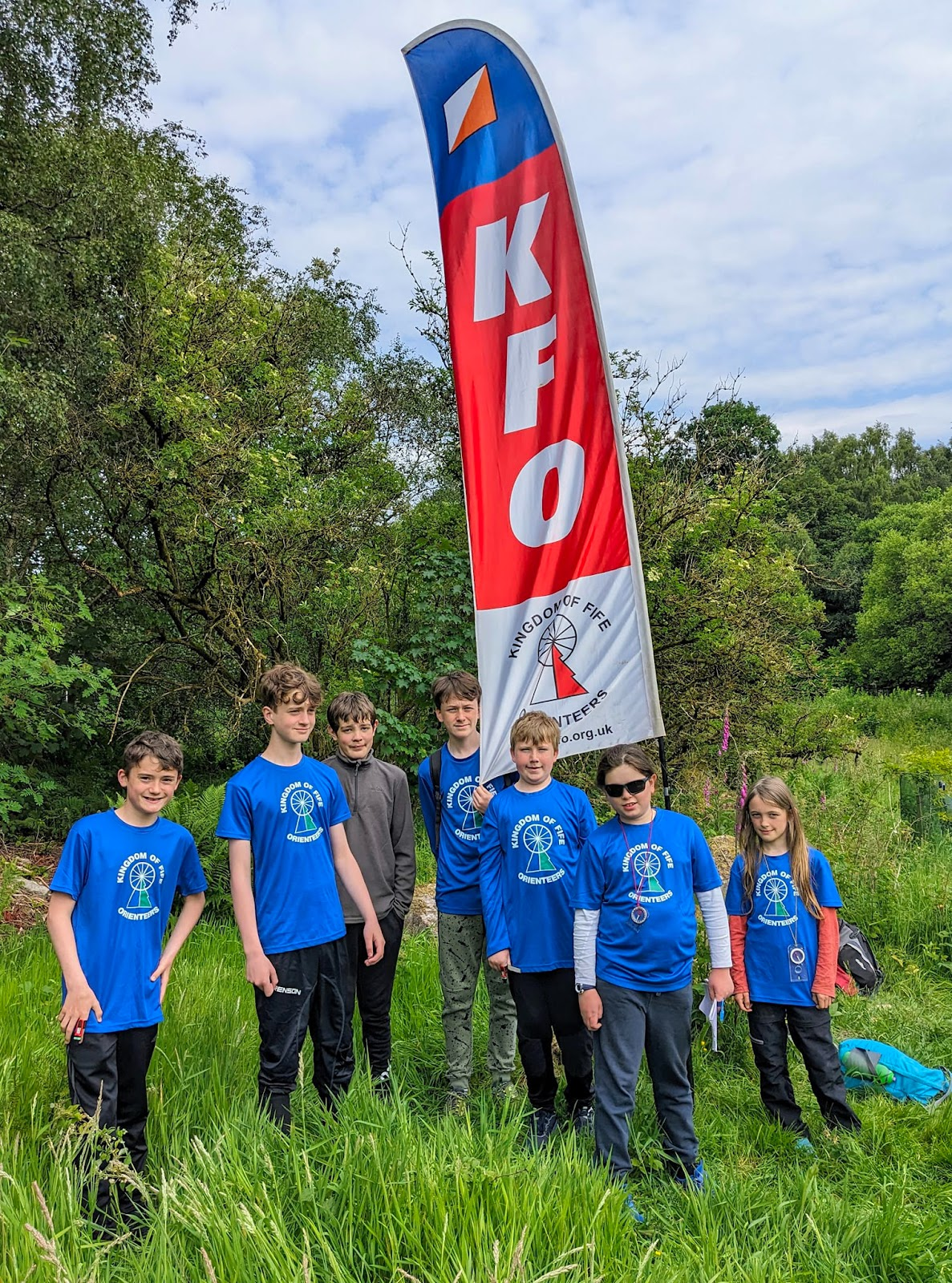
Key to KFO growth has been their personal approach to newcomers. Matthew Clark shares his six top tips to help get beginners established in orienteering:
- Make sure you have someone in the club whose job it is to look out for new
members. They should spot who has enjoyed their time orienteering and make sure they are helped to take their interest further.
- Mentor new participants. Show them previous maps. Discuss their day. Talk about your personal entry into the sport and what you get out of it.
- Communicate in normal language. Send people translations of other orienteering documents they may have had (Final Details documents are sometimes incomprehensible to newcomers. It will likely be a surprise to newcomers that Registration, Start, Finish and Download are in four different places. And who knows what “download” is, let alone, “collect your bib and follow the tapes to the start”).
- Email new participants afterwards to explain anything quirky about the day, and to highlight the next event.
- Send people information specifically badged for them, for example “you might like this event. This will suit you.”
- Always include at the bottom of your emails the simplest link you can find to become a member. This will probably just be the SiEntries link to the SOA/Club membership. Nobody wants to work out the British/Scottish thing. And you can send it every time. We buy stuff that is advertised to us on Facebook only when we have seen the advert approximately 2,300 times – this uses the same principle.
Since 2023, KFO have been focusing on developing their current members and growing their members’ skill sets. They have been doing this through mentoring and staging high quality local events. KFO now has a new chair Steve Clark who has joined the club within the last two years. Steve is looking to develop KFO member pathways to make it easier for new members and current members to see opportunities within the club. They also make a point to potential newcomers that they are a once a month club rather than a twice a week club like larger clubs. This helps set realistic expectations of joining.
Publicity
Lots of clubs are now delving into the world of advertising on social media. Facebook ads can be distributed across communities of people, for a small fee, to help advertise your club and upcoming events and clubs have found it’s often worth paying a small amount (~£10) to boost posts and widen their reach. You can tailor the audience for the boosted post by specifying geography as well as demographics and interests. Advertising on Facebook can also be done by yourself for free by posting in local community groups – attractive and relevant photos are key to making these stand out!
A great observation from Neil Polwart of FVO is that everybody has an ‘O-curious’ friend or colleague and often our most successful recruitment is done by simply giving this friend a little nudge.
CATI and Newcomer blocks
Forth Valley Orienteers attract new members by running newcomer blocks. These blocks are 5 linked coaching sessions aimed at families. Families pay for the block in advance and are expected to attend each session. These blocks have worked in attracting families.
After these blocks, juniors go onto FVO Stars to develop them to TD3 level before joining the SWAT (Scotland West Area Team). Parents go along to FVO stars and go join the adult group at SWAT training. Adults without children can also join the SWAT Adult group. The club focus on getting people involved in the sport rather than pushing them to become members straight away and feel that this makes the club feel more friendly and welcoming.
In Moravian’s experience, Come-and-Try-It events were most successful when targeted at families.
The gap between schools activities and club activities and the need to get parents involved
Moravian CDO, Will Hall, has been doing lots of work in schools across the Moray region, but has found it difficult to establish a pathway from the school into local club activities. This difficulty was also expressed by Roxburgh Reivers, showing it as a common cause of struggle. It was discussed what could be done to try and improve the uptake of children from school and increase their participation in orienteering events.
Old-school printed flyers and posters can have considerable impact when distributed through relevant channels such as community noticeboards and local groups. A simple but attractive and professional looking flyer is more likely to be read by the person receiving it. Receiving a paper flyer these days is now something that stands out, as most have evolved to using online tools such as emails. QR codes are a useful tool to link people to a website where they can find out more, but a flyer should have all the basic information needed on it, as well as relevant photos, to spark that initial interest. Information included on flyers should be communicated clearly and free from orienteering jargon – try testing it with someone external to see if it meets their information needs or not.
Running in-school activities are a great way to increase awareness of the sport, however it does not necessarily directly relate to an increase in membership. It was unanimously agreed that to get school children to adopt the sport, the parents have to also be involved. One way to do this is to advertise the availability of ‘anytime orienteering’ through permanent courses or the free app MapRun. MapRun is initially a difficult app to navigate, but once sussed is a very good tool for newcomers to give orienteering a go whenever they want. Running after-school sessions and encouraging the parents to come along could also be a good way to do this.
Roxburgh Reivers experienced no uptake from pupils following a school session, however found that younger pupils from the school came along to their club activities having not received the training in school. This seems to be a great example of how spreading awareness of the sport can have a positive impact, even if it’s not on those you might expect!
Attracting Runners
RR have been targeting trail runners by having a Red course at events and have successfully attracted trail runners. They have lots of sign ups for their red course this weekend at their Eildon Hills event. This event is in partnership with Tweed Valley Mountain Rescue, which may have helped with publicity around the event and getting trail runners along.
Interlopers have recently held two taster sessions linked to Parkrun Volunteer Takeovers, where the club took over all the volunteer positions at parkrun at day. They put on orienteering activities (short courses) after the parkrun for runners to try. Interlopers felt the takeovers were great for publicity and spreading awareness of orienteering and time will tell whether doing this helps to increase participation at club events – participants did at least say that they would like to do more.
Clubs typically capture emails (with consents to use) from event participants and then have a friendly club member use these to follow up to encourage further participation in particular opportunities that might be coming up. Some clubs use these contacts for building up external email circulation lists too.
Using Record Cards, Badges and the Star Award to Retain Juniors
Clubs have found a lot of success in using record cards, badges and the Star Award for motivating and retaining newcomer juniors. FVO use the star award to develop their juniors skills, ESOC use badges and record cards to encourage juniors to keep coming back. These are tools useful for retaining juniors, but also allow potential newcomers to see the benefits of getting involved.
Badges can be awarded for attending events as well as completing the different technical difficulties. If your club is interested in using these badges then get in touch with Fran Britain on info@scottish-orienteering.org to get a supply.
Weekly club activities – do they help with newcomer retention?
Both FVO and INT find their weekly club activities tend to be more popular with long-standing members and tend not to attract newcomers, while FVO’s weekly social run tends to be more popular with a wider range of members. FVO’s key to creating club spirit is engaging their members on residential trips. Another great quote from Neil: ‘friendships forged over the breakfast table are as important as on the podium!’. Having weekly club activities and the option of going on trips away are good for creating a team atmosphere and can be advertised to newcomers as additional benefits to joining the club. Having a positive club atmosphere makes it easier to get people to turn up to events and recruit volunteers. This can self-perpetuate to solve problems such as transport and booking accommodation which encourages newcomers to join in.
Further Development Opportunities and Resources
In addition to SOA support, British Orienteering offers a range of things for clubs and members. In particular, its 2025 online Development Conference is underway. Upcoming webinars include supporting orienteering in schools, embracing the menopause and the impact of CATI events on your local community. Sign ups and more information can be found here https://www.britishorienteering.org.uk/developmentconferences
British Orienteering have also recently released a new ‘Club Health Checker’ which can be used to identify areas of success for your club, as well as areas for improvement – this can be found within the Club & Membership Toolkit on their website.
Other sources of information are distributed by SOA through monthly club despatches (which should go to your club chair and secretary), the monthly newsletter and social media.