
Celebrating Neurodiversity Awareness Week
This week marks Neurodiversity Awareness Week, an important time to raise awareness and celebrate the unique strengths and skills of neurodiverse individuals. As the world begins to better understand the variety of neurological conditions and cognitive styles, it’s essential to foster an inclusive environment that allows people of all neurotypes to thrive. This week offers an opportunity to explore the ways in which orienteering can be both supportive and empowering for neurodiverse participants.
This article will discuss how orienteering provides opportunities and challenges that may appeal to those in the neurodiverse community. It will also explore the history and purpose of Neurodiversity Awareness Week, highlight the inherent advantages that orienteering offers to neurodiverse participants, and share practical ideas and suggestions on how orienteering clubs can make events more accessible and inclusive for everyone.
The History and Purpose of Neurodiversity Awareness Week
Neurodiversity Awareness Week was first initiated to raise awareness about the diversity of neurological conditions such as autism, ADHD, dyslexia, and dyspraxia. The week aims to combat stereotypes and misconceptions, promote understanding, and celebrate the strengths that neurodiverse individuals bring to society. Neurodiversity itself is the idea that variations in brain functioning are a natural part of human diversity, not something that needs to be “cured” or “fixed.”
Over the years, this week has grown in importance, with various organisations and communities worldwide coming together to educate and highlight the value of neurodiversity. It’s an opportunity to reflect on how we can better support individuals with different cognitive profiles, both in everyday life and within specific activities like sports.
The Advantages of Orienteering for Neurodiverse Individuals
Orienteering, as a sport, offers several inherent advantages that align well with the needs and strengths of neurodiverse people. The physical activity combined with mental challenges makes orienteering a dynamic and engaging experience. Orienteering also offers great adaptability when it comes to mapping (photographs, graphics, aerial maps, digi maps) and similar concepts (Turf, geocaching, treasure hunts, mazes, etc).
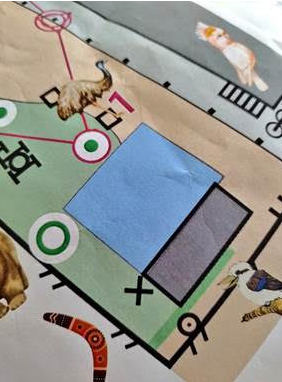
The photo below shows the map David Robertson, ESOC, has been using as part of his work with the ASN department at Ross High School in Tranent. It has been adapted to help the pupils better understand how the map relates to the area around them – the grass is green (not yellow!) and the blue area is a blue rubberised play surface (not a swimming pool!).
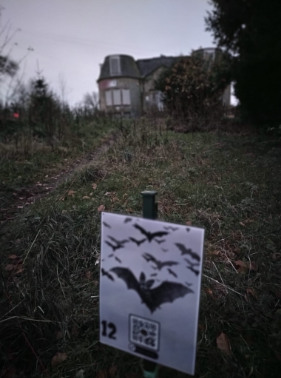
Pictorial controls were used to help keep the participants engaged and he has also been adding QR codes that can be used to download sounds, e.g. birdsong, zoo animals and spooky noises for a Halloween special event.
The following are some reasons why orienteering can be an ideal sport for neurodiverse individuals:
1. Promoting Focus and Engagement
Orienteering is a sport that requires both physical movement and mental sharpness. The need to focus on navigation, map reading, and decision-making can be especially engaging for neurodiverse participants and the repetitive nature is good for those with autism, for example. Individuals with ADHD, for example, may find the combination of activity and mental stimulation both motivating and rewarding.
2. Fostering Independence and Self-Reliance
Orienteering encourages problem-solving, autonomy, and the development of critical thinking skills. For many neurodiverse individuals, this can help build confidence and provide a sense of accomplishment.
3. Sensory Engagement
For individuals with autism or sensory sensitivities, the natural environment offers a rich variety of sensory inputs. Orienteering allows participants to experience and explore nature, while also giving them the space to manage and regulate their sensory experience. Many neurodiverse individuals find outdoor activities more comfortable and less overstimulating than indoor environments. This can be compared to team sports where the sensory load can often be unmanageable.
4. Building Community and Social Connections
Orienteering is a social sport, with events often bringing together individuals of all abilities and backgrounds. For neurodiverse individuals, this presents an opportunity to form connections, build relationships, and develop social skills in a welcoming, supportive environment. The sense of belonging within the orienteering community can be invaluable.
Insights from a Neurodiverse Orienteer
In 2023, Gemma Karatay from BASOC opened up about being an orienteer with autism and what this meant in terms of her personal experience at orienteering events. She wrote an article for the CompassSport magazine which highlighted her struggles, but also ways in which clubs can make their events more inclusive and overall a more positive experience for people with neurological differences. Gemma’s article can be read here.
One of the ideas worth highlighting from this article is having silent start boxes and separate quiet areas near the start. Often all the noise and busyness around the start area can be overstimulating and cause increased stress, leading to a less positive experience overall. This is obviously reliant on the restrictions of space, but takes limited time and effort to set up and can really help improve peoples’ experience.
Making Events More Accessible and Inclusive
While orienteering already offers numerous benefits to neurodiverse participants, there are several ways clubs and event organisers can make the sport even more accessible and inclusive. David Robertson has been working with a Community Interest Company based in East Lothian called Venturing Out who provide outdoor adventurous activities for families with one or more ASN children. Antony Stone, a Venturing Out staff member, has provided some points on what orienteering can offer and how it can be made more inclusive. He notes that the majority of young people they work with are diagnosed with ASD.
“My tip is, don’t under estimate anyone. We do unfortunately have pre conceptions but there have been times where these are proven wrong. Just because they have a learning difficulty or diagnosis of ASD they could be well attuned to something like orienteering. It may be the repetitive nature of orienteering, but some just take to it and have shown excellent ability to grasp the concept and then go and do courses on their own, often surprising their parents. The competitive element is also a draw for many autistic young people. Things to consider for a client focused event:
- Venue based on the ability of the families attending. Rather than setting an event and inviting people, we will find out which families are coming and then choose a venue that best suits them.
- Proximity of those who don’t have transport or have anxieties using public transport due to their ASD. Take the event to them.
- Terrain for those who are wheelchair users or have other mobility issues.
- Adaptations for those with impaired vision, we have produced maps to A3 and increased text size.
- Understand that ASD is very wide ranging. Lots of the young people that come to us have various conditions, autism is just one of them.
- Have enough staff to help out with shadowing.
- Use the families who have been before. Many of our families didn’t know each other prior to these sessions but now enjoy meeting at the sessions.
- Think outside the box. Use other resources such as photographs for those who cannot understand maps straight away. Help them to understand the system before introducing maps.
- For groups new to night orienteering attach glow sticks to controls.
- Be prepared to put in the extra prep time. Inclusion takes time and effort beyond that of regular sessions!”
Antony also provided a useful list of things NOT to do!
- “Don’t do nothing. The extra effort and time it takes to be inclusive is very rewarding and you really can make a difference to someone’s life.
- Don’t over complicate things. Yes, it takes time and effort but you don’t need anything other than a good suitable venue and enough people to help out
- Don’t consider all with ASD the same. This is a very wide ranging disorder and is often associated with other diagnosis
- Don’t underestimate ability
- Don’t deliver the same way all the time. Don’t be scared to try different techniques of delivery. Allow people to learn their way, not yours.”
We feel that the vast majority of clubs understand the importance of having a dedicated volunteer to meet and greet newcomers to their event, but it is just as important to make sure that this volunteer is well suited to this role. They need sufficient empathy to understand the correct amount of interaction a person needs/wants and this can be important for all people, not just those with neurological differences.
Discuss!!
This article just covers a few ideas – it is important to note that it isn’t a one size fits all solution. Many orienteers self-identify as neurodiverse and are in a position to articulate to clubs their experience and what can be done to make it more positive, so we would highly encourage all clubs to have this conversation with their members and share their experiences and learnings with the rest of the orienteering community.